Guide 03 / Follow the light

Daylight Among the Pines

A good winter forest day leaves room to notice things. Choose an outing that fits the light, the ground beneath your boots and the person walking beside you.

Choose your outdoor pace
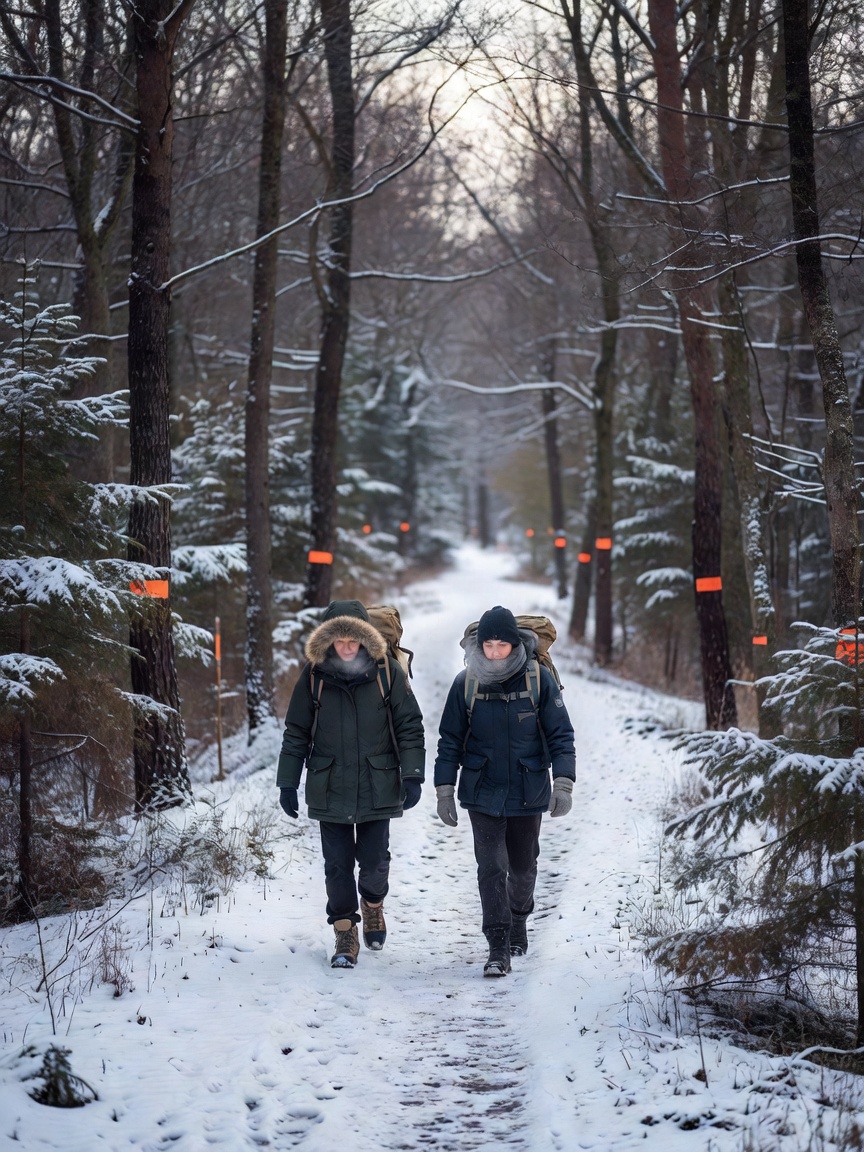
Two travellers walking a clearly marked woodland path in soft winter daylight
Route conditions must be checked locally, even on marked paths.

Let the available light set the scale

Start with local sunrise, sunset and the forecast, then plan an outing that finishes comfortably before the light fades. Do not treat the last minute of daylight as a target arrival time. Woodland can be dim, cloud can thicken and a short delay can become a cold one. Build your return around a margin rather than an optimistic walking speed.

Distance alone is a poor guide to effort in winter. Snow, mud, ice and fallen branches can turn a familiar length of trail into a slow undertaking. Check the land manager’s current notices and ask locally about the specific route. Choose an obvious turnaround point before you leave so that changing the plan feels like following it, not failing it.

Match the day to the whole group

Ask what everyone wants from being outside. One person may want a brisk walk while another hopes to photograph frost or listen for birds. A short shared loop followed by an optional extension can work better than persuading the whole group into a demanding route. Never leave an inexperienced companion to find their own way back simply to preserve someone else’s itinerary.

Children and people with limited stamina may need warmer pauses, shorter distances and easier retreat options. A path described as accessible may have a firm surface in summer but different conditions after freezing rain. Confirm gradients, gates, toilets and winter maintenance directly rather than relying on a symbol on a map.

Activities grouped by effort

These are planning categories, not guarantees of suitability. Current conditions can move an apparently easy activity into a much more demanding category.

Low effort

Woodland noticing walk

Choose a short, maintained route near your base. Look at bark, cones and tracks without collecting or disturbing them. Turn back while everyone is still comfortable.

Moderate

Marked trail with a warm-drink stop

Use a route with clear junctions and a simple return. Carry an insulating layer for stops and a drink that does not depend on finding an open café.

Specialist

Guided snowshoeing or cross-country skiing

Book only after discussing experience, conditions and equipment with a qualified local provider. A walking trail is not automatically suitable for either activity.

Use forest regions as starting points, not promises

Oulanka National Park in Finland and Fulufjället National Park in Sweden offer very different winter settings from Germany’s Black Forest or the lower trails of the Bavarian Forest. Poland’s Kampinos National Park and Stołowe Mountains National Park have their own terrain, visitor rules and seasonal considerations. A beautiful regional photograph does not establish that a particular route is open, easy or close to your cabin.

For Scottish woodland, Glenmore Forest Park and the wider Cairngorms area also illustrate why setting matters: a sheltered forest walk and an exposed upland outing are not interchangeable. Select the actual route, check its elevation and exposure, and use the responsible land manager’s information. Avoid turning a regional inspiration list into an assumed itinerary.

Carry warmth and a way home

Wear layers that allow you to adjust before becoming sweaty or chilled. Bring suitable footwear, a waterproof outer layer, gloves, a hat and spare warmth for stops. Pack a charged light even when you intend to return before dark, alongside food, water, navigation and the communication equipment appropriate to the outing. Equipment does not replace judgement or route knowledge.

Save a map for offline use and understand the junctions you expect to meet. A phone battery can lose capacity in cold conditions, so keep devices protected and do not rely on a single electronic tool for a consequential route. Share your plan and expected return with someone who knows what to do if you are overdue.

Leave the winter forest undisturbed

Stay on permitted routes, respect closures and give wildlife space. Winter is an energy-demanding season for animals; approaching for a photograph or leaving food can cause harm. Keep dogs under the control required locally, avoid trampling sensitive ground and take every piece of litter back with you. Fallen branches, moss and pine cones are not automatically free decorations.

Never infer that frozen water is safe from its appearance, footprints or proximity to a popular path. Choose land-based alternatives unless a competent local authority or organised provider has established a suitable managed activity. When wind, ice or fatigue make the planned walk unattractive, shorten it. A quiet hour among the trees followed by a warm cabin is a complete winter day.