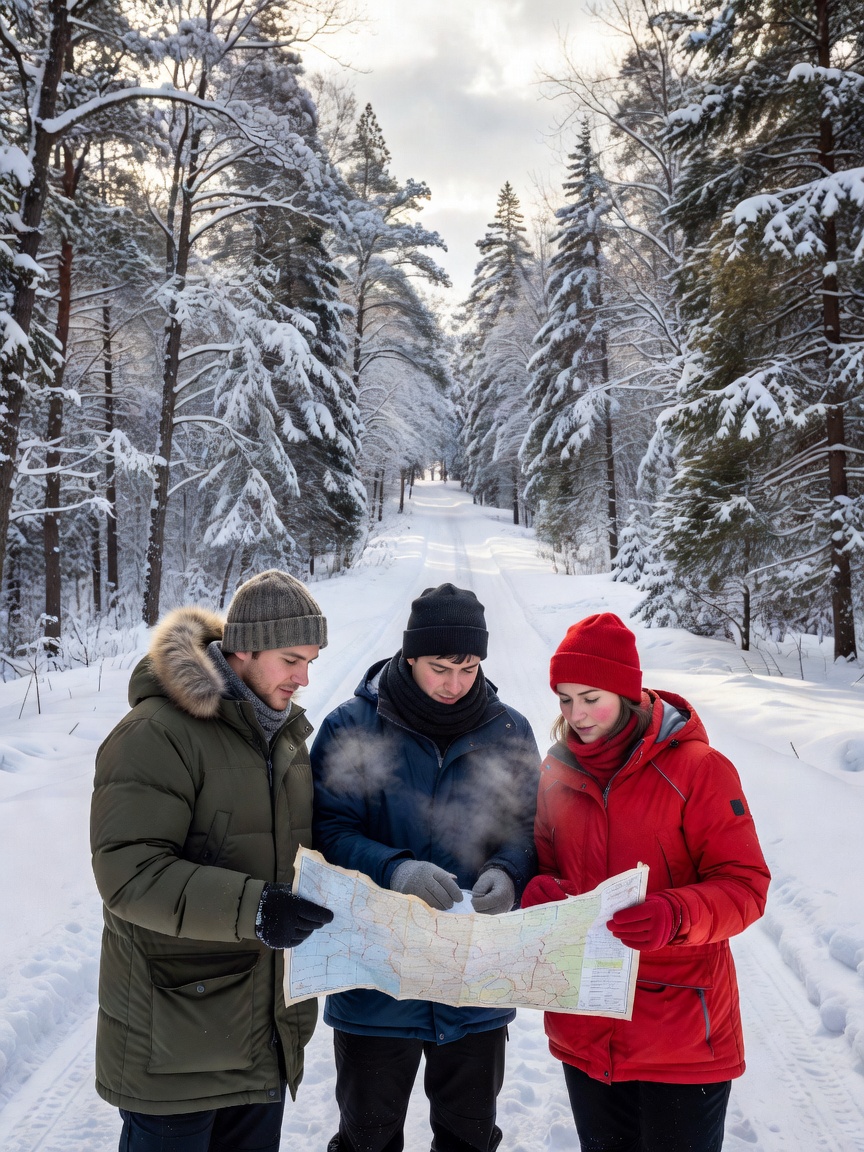
Plan backwards from the front door
Begin with the time you want to be inside the cabin, not the time a navigation app predicts you will reach the nearest town. Allow for collecting keys, finding an unlit entrance, parking, carrying bags and understanding heating controls. Check sunset for the actual location and dates, then aim to complete unfamiliar outdoor tasks well before it. Dense woodland and heavy cloud can make an approach feel dark earlier.
A buffer is not wasted holiday time. It gives you room to stop for groceries, make a wrong turn without pressure and ask the host a question while help is available. If the only workable itinerary arrives late, ask for clear written directions and decide whether a less remote first night would be the more comfortable choice.
Separate a public road from a private lane
The main road may be maintained while the cabin’s final approach is not. Ask who clears snow, how quickly that usually happens and whether clearing includes the parking space. Find out about gradients, narrow sections, turning areas and any gate that needs a code. A general statement that a cabin is “accessible in winter” is not enough to assess your vehicle or confidence.
Do not assume four-wheel drive resolves winter risk. Tyres, traction, visibility, stopping distance and driver experience all matter. Check current legal equipment requirements for every country you will drive through and confirm any rental-company restrictions. If chains are relevant, understand whether they are permitted, required in particular conditions and compatible with the vehicle before departure.